




















































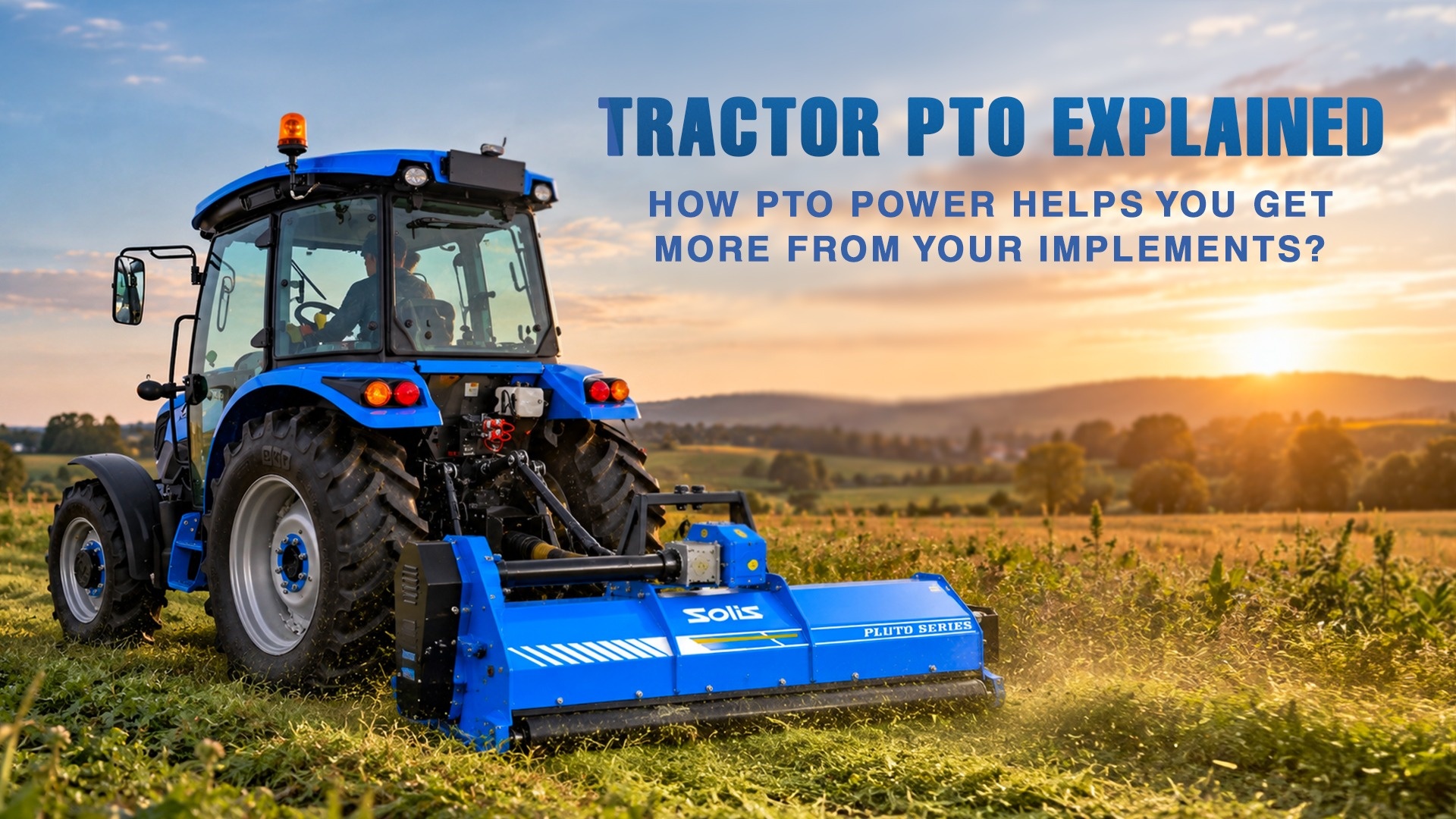
You’ve bought a new rotavator from a tractor dealer. The dealer claimed your 35-hp compact tractor would handle it no problem. Now, however, the implement is struggling along at half speed, stalling on every third pass, leaving you wondering what went wrong. Here is a thing nobody told you, or a first-time buyer: engine horsepower is basically a marketing number.
What actually spins that rotavator, mower, or baler is the tractor PTO. If you don’t understand how tractor PTO works, you’ll keep investing in implements that struggle with your machine instead of working with it. The wrong match wastes fuel, strains the gearboxes, and leaves your field tasks half finished even with the best tractors.
In this guide, we’ll uncover what PTO actually means, why PTO HP matters more than tractor horsepower, and how to match tractor implements to your tractor without guessing.
What is Tractor PTO ?
PTO on a tractor stands for Power Take-Off. It is basically a rotating shaft situated at the rear or sometimes at the front of your tractor. This shaft takes the mechanical power straight from the engine and transfers it to the implement hooked behind the tractor. Consider it like a wall outlet. Except instead of powering a lamp, it’s spinning a rotavator or tiller.
Most compact tractors use a PTO shaft with 6 to 21 splines depending on the class of horsepower. Therefore, getting the spline count wrong is one of the most common mistakes new buyers make. Tractor PTO explained simply: no shaft running means no power reaching the implement.
Engine HP Vs PTO HP
Here is where most buyers are tricked, and the brochure takes advantage of numbers. That 45-horsepower engine in the brochure is the engine output, which is measured before power gets transferred before it gets transferred to the transmission, hydraulics, and cooling fan. By the time the horsepower reaches the PTO shaft, around 10-20% is lost to friction and drivetrain drag.
When you do the math, a 45-hp tractor only delivers roughly 36 HP. So when a brochure provides a PTO ballpark, don’t just glance at the number and do the guesswork. Instead, look for the specific number.
Types Of Tractor PTO: Matching Implements To A Tractor
Most tractors come with three PTO speeds: 540 RPM, 540E RPM & 1,000 RPM. Smaller and lighter implements like rotary cutters and small tillers usually operate efficiently at 540 / 540E RPM. If your implements are larger, like rotavators, harvesters, or high-capacity balers, they need a 1,000 RPM PTO.
Use a 1,000 RPM implement on a tractor delivering 540 RPM, and you’ll starve it of power. Do the opposite, and the risk of overspeeding the implement increases. This can shear a pin or worse. Some tractors come with dual-speed PTO, which allows you to switch between the two, helping you to run a mix of implements. Check the tractor manual and implement spec sheet before using an implement. Use numbers, not guesswork!
Why PTO Horsepower Matters?
With tractor PTO explained, it’s essential to understand why PTO HP matters and here are the reasons why you must understand it before coupling implements:
- Fuel Efficiency: The wrong PTO forces the engine to work more, leading it to burn more diesel per acre worked.
- Implement Wear: The wrong speed or insufficient power leads the belts, gearboxes and pins to stress and wear faster over time.
- Quality of Work: When implements are used with the correct PTO speed, mowers cut cleaner, balers can pack more tightly, and pumps offer steadier flow.
- Resale Value: A tractor using the right implement faces less wear and tear, meaning it maintains a better resale value on the market.
- Safety: Mismatched implements may cause tractors to stall unexpectedly or bind the shaft, something you wouldn’t want mid-work.
Conclusion
At the end of the day, tractor PTO HP is the number that shows what implements can do. When you check the PTO and match it to your desired tractor implements, you get better productivity, results, precision, and durability.
Looking to buy the most reliable tractor for your agricultural needs? Choose Solis tractors today. Explore our lineup and buy the ideal tractor. Contact us today for more information.



0 Comments