


















































A farmer near Munich bought a 90-HP utility tractor last spring. He owned a smallholding, under 3 acres of orchard and pasture, looking for a machine to till the soil. A big machine for a small job. Within the season, the tractor rarely left the third gear, resulting in diesel consumption climbing fast. The cost of insurance was more than the worth of the land itself. However, the problem wasn’t the tractor; it was choosing the wrong horsepower class for the job.
That’s the trap, and this exact mix-up occurs constantly in the compact tractor vs utility tractor debate. Buying the wrong machine from either class costs you real money, whether you overspend upfront or spend less for a smaller machine. Horsepower alone won’t help you choose the tractor for small farms. What matters is the acreage, your tasks, and the implements you want to run.
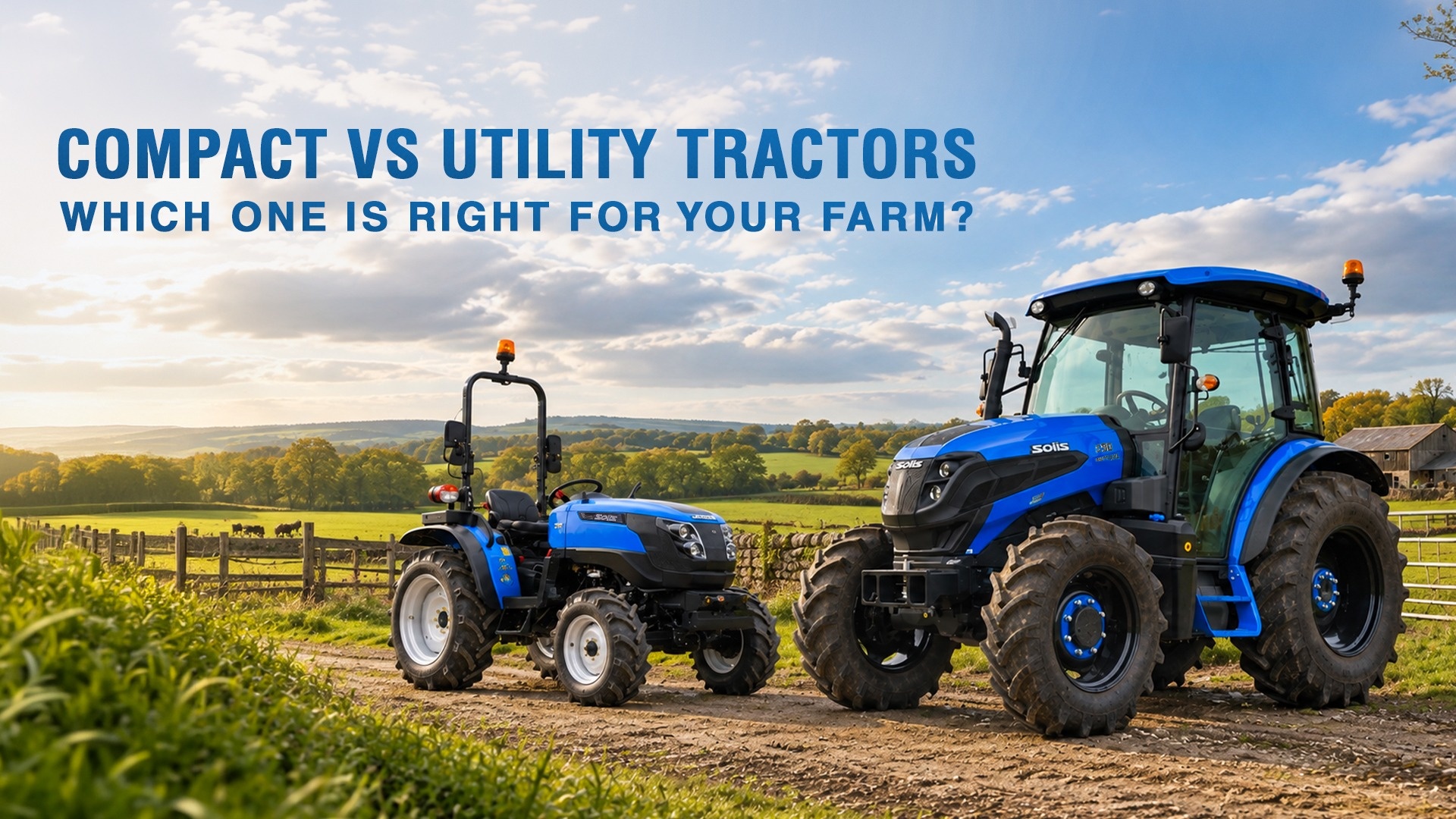
In this blog, we’ll explore both types of tractors in detail and finally help you select one from the compact tractor vs utility tractor debate.
What Is A Compact Tractor?
Compact tractors are smaller and lighter farming machines. They usually come with engines that fall in the 15 to 50 horsepower range. They perform well in tight spaces where manoeuvrability matters the most, making them ideal for plots between 2 and 3 acres. However, some farmers go up to 20 acres. Compact tractors are highly useful for small orchards and yards where larger machines struggle to operate.
Compact tractors come with a 3-point hitch and rear PTO. The rear PTO is used to run rotary tillers, box blades, and mowers. These light attachments cause minimal soil compaction, which makes them usable for small farms, orchards, and residential acreage. While they can handle front loader work, their lighter chassis puts limitations on maximum breakout forces and lifting capacities.
If you need to navigate through narrow gates or groom pastures, the best compact tractor makes your daily chores simple without crushing your equipment budget.
What Is A Utility Tractor?
Utility tractors step up the game in many directions. They come with heavier frames, engines with higher HP, often ranging between 50 and 125 HP, stronger PTO output and hydraulic systems. These features make them ideal for running bigger and heavier implements like rotary tillers, balers, or front loaders.
These machines also excel with higher stability on rough and uneven terrain, which is one of the most important utility tractor benefits that farmers often look for. Their higher weight delivers the grip you need for operating in deep mud, where lighter machines fall short. However, with that size comes the demand for a wider turning radius and large space for storage. If you manage large farms, haul heavy agricultural produce, or run livestock operations, utility tractor benefits are apparent.
Compact Tractor Vs Utility Tractor: Head-To-Head Comparison
Evaluating the compact tractor vs utility tractor comparison side-by-side comes in handy when you need to decide which machine suits your needs. Choosing the right machine depends on the lifting capacity and frame agility.
| Feature/Factor | Compact Tractor | Utility Tractor |
| Horsepower Range | 15-50 HP | 50-125 HP |
| Weight | Lighter; more agile | Heavier; better traction |
| Typical Acreage | Up to 20 acres | 20+ acres |
| Primary Applications | Mowing, tilling, light loading, small plots | Haying, heavy tillage, loader work, baling, larger plots |
| Lift Capacity | Moderate (500-2,000 kg) | High (2,000-4,000 kg or more) |
| Maneuverability | Great for smaller farms & tight spaces | Requires wider turning radius |
| Running Costs | Lower fuel & upkeep costs | Requires more fuel & maintenance costs |
| Soil Impact | Low compaction | Higher compaction |
Compact Tractor Vs Utility Tractor: How To Decide?
Start with the size of the land, not the model suggested by your local dealer. If you work on plots under 20 acres and your tasks include mowing, light tilling, vineyard work or general tasks, a compact tractor wins.
Move up to Solis utility tractors if you’re working on more challenging tasks or operating on terrains. Choose utility if you’re running livestock, hauling loaded trailers or working on plots over 20 acres. Utility tractor benefits include higher torque and PTO ratings for heavier fieldwork, operating heavier attachments and bigger implements.
Whichever category fits your farm better, Solis provides both tractor classes with consistent build quality, so whether you’re picking smaller or larger tractors, it doesn’t feel like a compromise.
Conclusion
The real difference between a compact tractor vs utility tractor comes down to the requirements of the land, not what the salesperson claims is the best. Match the tractor to your acreage and weekly tasks, and you’ll avoid buying the wrong machine. Engine horsepower matters less than the information regarding what you will do with the machine, year-round, month after month.
Ready to buy the best tractor for small farms or utility tractors for larger farms? Solis is one of the leading tractor manufacturers in Europe, specialising in making and delivering quality tractors. So whether you want the best compact tractor or utility tractor, Solis offers both. Contact us today for purchases or more information.



0 Comments