




















































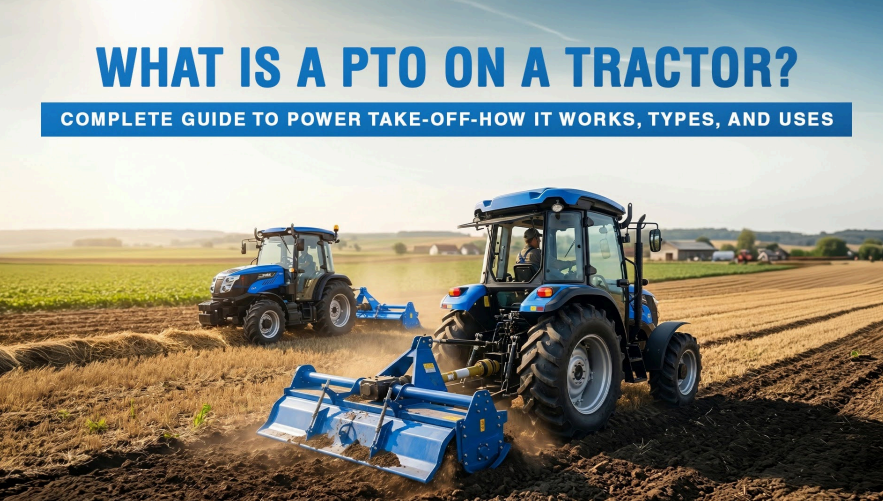
Every tractor comes equipped with an engine, but not every farmer knows how to take the fullest advantage of the engine specs. If you have ever wondered “what is a PTO on a tractor” and why it matters, you’re in the right place.
Compact tractors for municipal work are built for versatility; they allow operators to handle multiple tasks without switching between machines. From landscaping projects to daily maintenance operations, the shift towards compact equipment reflects a broader need for smarter, more practical machinery.
Short named for “Power Take-Off”, PTO in tractors is simple: it is a shaft-driven system that delivers your tractor’s engine power directly to attached implements like mowers, balers, & pumps. Without a PTO system, your tractor is just a vehicle.
Understanding & assessing how this system works & the different types of PTO available helps you make smarter buying decisions, operate implements more efficiently, & get far more advantage from your farming equipment every hour in the field.
What Is A PTO On A Tractor & How Does It Work?
Power take-off in tractor systems operates by delivering the engine’s rotational power through a splined output shaft, which is usually located at the rear section of the tractor. When you activate the PTO, the shaft spins & transfers that power directly to a connected implement, like a tiller, mower, or an auger.
The integrated shaft operates at two standardised speeds: 540 RPM, suited for standard implements, found on compact & utility tractors. The other is 1,000 RPM, designed to operate high-capacity & heavy implements on large, high-horsepower tractors.
Matching the right PTO RPM to your implement is essential because using the wrong speed can damage the equipment or significantly reduce overall operational efficiency. Most modern tractors use an electro-hydraulic switch to engage the tractor PTO, which makes the process safer & easier than older mechanical levers.
Types Of PTO In A Tractor
Now that you know What is a PTO on a tractor, it’s important to note that not all types of PTO share the same working mechanism. It depends on your tractor model & the implements you’re using.
Selecting the right type of PTO can translate to a significant difference in efficiency, fuel savings, performance, & machine durability. Here are the core types worth knowing about.
1. Transmission PTO
Transmission PTO is the oldest & the most basic type of tractor PTO. It is directly connected to a tractor’s gearbox, meaning the PTO shaft only spins when the tractor is in gear & moving forward. When you press the clutch or stop the tractor, the PTO disengages automatically. It is a simple mechanical setup that needs no separate engagement system, which makes it easy to use for beginners.
Benefits
- Simplistic design with fewer components to maintain
- Lower maintenance costs
- Ideal for basic & low-demand implements
- Great for small farms & simple tasks
2. Live PTO
Live PTO uses a two-stage clutch design. The first stage disengages the transmission, whereas the second stage controls the PTO. This means the PTO shaft keeps spinning even when the tractor slows down or briefly halts. This mechanism gives an operator more control over the implement they are using without interrupting the power supply. Live PTOs are especially useful in tasks where stopping implements in between tasks can cause problems or damage.
Benefits:
- Live PTOs keep implements running even during tractor stops
- Reduces jams in balers & similar implements
- Promotes better operator control during field work
- Suitable for mid-level farming operations
3. Independent PTO
Independent PTO is the most advanced & popular type used in modern tractors. This PTO type uses entirely separate clutch systems, fully independent of a tractor’s gearbox & ground movement. You can engage or disengage the tractor PTO at any time without affecting how the tractor is driving.
Most modern Solis tractors are equipped with an Independent PTO, providing operators the flexibility of mechanical & electro-hydraulic engagement options for extra convenience & safety.
Benefits
- Offers full control regardless of the tractor’s speed & direction
- Much safer to operate in different field conditions
- Compatible with the widest range of tractor implements
- Perfect for farming & light construction applications
4. Economy PTO
Economy PTO runs tractor implements at the standard 540 RPM output, but at a lower engine speed than other PTO types. The tractor’s engine doesn’t need to rev as high to deliver the same shaft speed to the implement. This is made possible through a different gear ratio within the power take-off in tractor. This makes it best suited for implements that don’t have high torque requirements but need consistent RPM for long hours.
Choosing the right machine for public maintenance requires a balance of manoeuvrability, efficiency, and compatibility with specialised attachments.
Benefits
- Lowers fuel consumption during extended operations
- Reduces engine wear over time
- Much quieter compared to standard PTOs
- Lower per-acre costs on large farms & fuel-heavy tasks
Speed Ratings
1. 540 RPM: Standard for lighter implements, uses a 6-spline shaft
2. 540E: Same as the standard 540, but achieves peak RPM at lower revs
3. 1,000 RPM: Ideal for heavy-duty & high-demand implements, uses a 21-spline shaft
4. 1,000E: Reaches peak (1000 RPM) output at reduced engine speeds, found in modern tractors.
Importance Of Tractor PTO
1. Versatility: The PTO system enables your tractor to power implements, like tillers, rotavators, and balers, making it essential for agricultural & industrial applications.
2. Better Productivity: By enabling tractor implements to operate directly & efficiently with the engine, the PTO enables faster & more effective field operations.
3. Fuel Savings: Modern PTOs like (540E) allow tractors to offer peak PTO power at lower revs, earning better fuel efficiency.
4. Operational Control: Features like Reverse PTO enable operators to clear clogged equipment without leaving the tractor.
5. Better Adaptability: Whether you’re farming, landscaping or working at construction sites, the power take-off in tractor easily adapts to your workload.
Common Uses Of Power Take Off In Tractor
1. Rotavators & Tillers: Used to break & prepare soil before every sowing season.
2. Hay Balers: Compress & bind hay without needing a separate power source.
3. Post Hole Diggers: Drives augers for fencing, planting & foundation works.
4. Water Pumps: Powers irrigation pumps directly from the tractor engine.
5. Harvesters: Drives harvesting heads on combine attachments in small farms.
PTO Safety & Selection Tips
Safety Practices
Never step over or near a spinning PTO shaft; loose clothes can get caught instantly.
Always deactivate the tractor PTO before getting off your tractor
Install & maintain PTO shaft guards for better safety.
Ensure bystanders, especially children, are away from where you’re operating.
Selection Tips
Match the implement’s horsepower requirements without your tractor’s PTO output
Choose an independent PTO if you work on tasks where frequent starting & stopping during operations are prevalent.
If you’re working on fuel-demanding jobs, consider Economy PTO capability.
Check if an implement needs 540 or 1000 RPM, & confirm your tractor supports that speed.
Maintaining your PTO system always starts with the transmission. The rear axle houses the PTO mechanism & regularly changing the transmission oil directly impacts your tractor’s PTO performance & longevity. Watch this official Solis DIY guide to learn how to replace transmission oil properly.
Solis Tractor How to Replace Transmission Oil (Rear Axle) | DIY Guide
Final Thoughts
Now you know what is a PTO on a tractor, how it operates, its importance & why selecting the right type matters for your farm & construction needs. Whether you’re comparing tractor models or choosing implements, understanding the types of PTO helps you avoid incompatibility & improve productivity. If you want better results from your equipment, start by checking the PTO type, RPM & implement compatibility before you buy your next tractor.
Both models are available with a cab and without cab models. Both serve as perfect examples of how small tractors for city maintenance can outperform larger machines in restricted environments.



0 Comments